What are AI-powered knowledge bases and how do they work?
AI knowledge bases use NLP and machine learning to provide intelligent search, auto-generate content, and reduce support tickets by 25-35%.
Key Takeaways
- ✓AI knowledge bases reduce support tickets by 25-35% through self-service
- ✓Natural language search improves content discovery by 50%
- ✓Automated content generation saves 10-15 hours per week for support teams
- ✓Machine learning continuously improves search relevance and accuracy
- ✓Integration with existing support platforms increases adoption rates by 60%
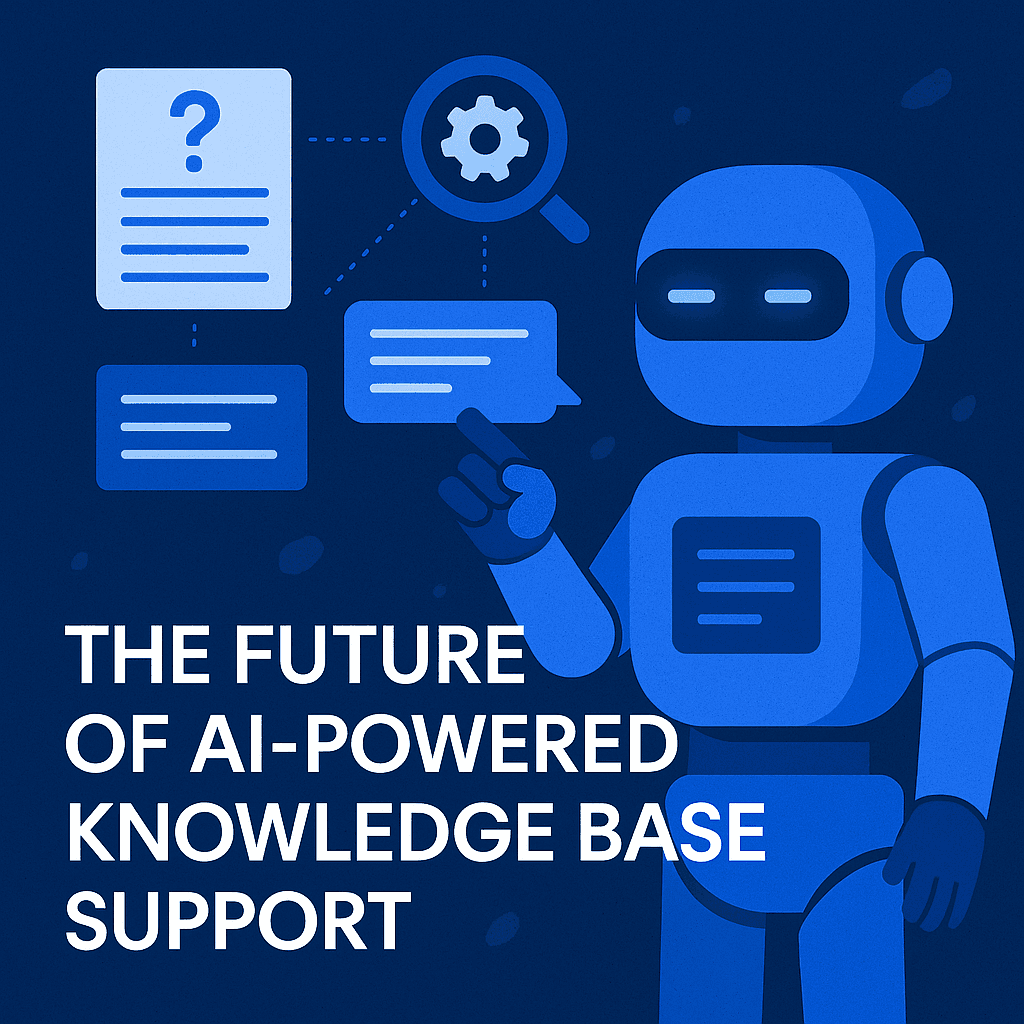
The Future of AI-Powered Knowledge Base Support
AI-powered knowledge bases represent the future of customer support — using NLP and machine learning to deliver intelligent search, auto-generate content, and reduce support ticket volume by 25-35%. Autonomous AI support platforms like Twig are leading this shift for SaaS and e-commerce teams, integrating with existing tools like Zendesk and Confluence to replace static help centers with dynamic, self-improving knowledge systems.
TL;DR: AI-powered knowledge bases leverage natural language processing to understand user queries, automatically generate and update content, and provide contextual search results. These systems reduce support ticket volume by 25-35% and improve first-contact resolution rates by 40%. They continuously learn from user interactions to improve content relevance and search accuracy over time.
Key takeaways:
- AI knowledge bases reduce support tickets by 25-35% through self-service
- Natural language search improves content discovery by 50%
- Automated content generation saves 10-15 hours per week for support teams
- Machine learning continuously improves search relevance and accuracy
- Integration with existing support platforms increases adoption rates by 60%
The Emergence of AI Knowledge Base Technology
Historically, knowledge bases have served as essential repositories for company policies, product guides, and troubleshooting articles. However, as data volumes grow and customer expectations rise, manual knowledge base systems struggle to keep up.
AI knowledge base solutions now leverage:
- Machine Learning
- Natural Language Processing (NLP)
- Semantic Search AI
These technologies transform unstructured data into searchable, context-aware, and continuously evolving support content.
Transforming Automated Knowledge Management
AI is redefining how support content is created, managed, and delivered. Rather than relying on manual curation, automated knowledge management offers:
- Enhanced Data Organization
AI categorizes information based on usage frequency and context, ensuring relevant content remains easily accessible. - Real-Time Updates
As new issues arise and customer behaviors change, AI systems adapt—automatically updating articles and flagging outdated content. - Predictive Content Delivery
AI anticipates user needs and recommends the next best piece of content, minimizing effort and time for the user.
The Role of AI Search Suggestions
AI-enhanced search dramatically improves the support experience for both customers and agents.
Key Advantages:
- Intent Recognition
AI understands the meaning behind a query, not just the keywords. - Contextual Relevance
Based on past queries and user behavior, search suggestions are fine-tuned to the individual. - Continuous Learning
Every user interaction improves future search accuracy, reducing time to resolution.
Elevating Help Articles with AI
Creating effective help content is resource-intensive—but AI makes it scalable.
The AI FAQ Builder
A powerful component of AI knowledge base systems, the AI FAQ builder:
- Automates FAQ creation by analyzing common support queries
- Ensures tone and language consistency with brand voice
- Continuously learns and updates based on user interactions
This results in cleaner, more relevant, and always-up-to-date help content.
Semantic Search AI: Smarter Information Retrieval
Unlike keyword-only searches, semantic search AI delivers precise answers through contextual understanding.
- Natural Language Understanding
Queries in plain language—across styles and dialects—are accurately interpreted. - Deep Contextual Mapping
Searches reflect the true intent of the user, drastically improving the relevancy of results. - Noise Reduction
Irrelevant results are filtered out, allowing users to find what they need faster.
Strategic Benefits for B2B Leaders
For decision-makers—including VPs, Heads of Support, and IT Managers—AI knowledge bases offer clear strategic benefits:
- Scalability
Handle growing volumes of content and support queries without proportional increases in cost. - Cost Efficiency
Automating routine updates and responses reduces the need for extensive staffing or outsourcing. - Enhanced Agent Focus
Free agents from repetitive queries to focus on high-impact support tasks. - Competitive Advantage
Early AI adopters are positioning themselves as leaders in CX and operational excellence.
Overcoming Implementation Challenges
Adopting AI technology can pose challenges. Success depends on proactive planning and cross-functional collaboration.
Key Considerations:
- Data Quality and Readiness
Ensure existing content is accurate, tagged, and structured for machine learning compatibility. - Technical Expertise
Engage skilled professionals or trusted AI solution providers to ensure effective implementation. - Change Management
Communicate clearly with internal teams, train users on new tools, and align organizational processes with AI capabilities.
The Future of AI Knowledge Bases
As AI technology evolves, knowledge bases will become more predictive, intuitive, and interconnected.
Emerging Trends:
- Personalization at Scale
User-specific content delivery based on historical usage, behavior, and profile data. - Cross-Platform Integration
Unified knowledge systems across CRM, chatbots, social platforms, and internal tools. - Next-Gen AI Algorithms
Faster, smarter insights and seamless navigation powered by cutting-edge machine learning models. - Voice and Visual Interfaces
Hands-free, multimodal access to support information through voice recognition and visual cues.
Conclusion
AI-powered knowledge bases represent more than an upgrade—they are a strategic imperative for future-ready organizations. From automating content to delivering highly personalized support experiences, these tools are reshaping how companies think about customer service and operational efficiency.
By embracing AI now, companies can:
- Reduce support costs
- Empower self-service
- Improve content quality
- Strengthen customer satisfaction
- Future-proof their support infrastructure
The future is intelligent, agile, and AI-driven. Are you ready?
Try Twig for free today and experience the future of knowledge base support
Related Pages
See how Twig resolves tickets automatically
30-minute setup · Free tier available · No credit card required
Related Articles
Which AI customer support vendors should I compare in 2026?
Top AI support vendors in 2026 include Decagon, Sierra, and Forethought, with the market reaching $15.12 billion and 56% of interactions AI-handled.
9 min readWhat Are AI Hallucinations in Customer Support?
AI hallucinations are false information generated by AI systems, posing major risks to customer support accuracy and brand reputation.
11 min readHow long does AI support implementation actually take?
AI support implementation ranges from 30 minutes to 90 days, depending on platform architecture, training requirements, and integration complexity.
10 min read