What an AI SDR must do — and how Sera does it
Most teams arrive at the AI SDR category confused about what should and shouldn't count as one. Below is the working definition we use after deploying Sera on 100+ B2B teams: the six jobs every inbound AI SDR must do, why each matters, and how Sera covers all six. Use this as the buyer's frame before you compare vendors.
By Chandan Maruthi, CEO of Twig · Updated May 2026

AI SDR
Sera
Inbound · by Twig
Chat, voice, email
Chat· Voice· Email
Qualifies + books
Intent classifier → calendar handoff
24/7, no queue
Under-60-second first response
Working definition
An inbound AI SDR is an autonomous agent that handles website demo requests, inbound calls, and inbound email — qualifying intent, booking the meeting, and logging to your CRM — without human intervention on the majority of conversations. It's not a chatbot (rules-based, pre-LLM). It's not an outbound dialer. It's the post-LLM replacement for the “form + 24-hour callback” motion that runs most B2B inbound today.
The 6 jobs every AI SDR must do
For each job: why it matters, the failure mode if you skip it, and how Sera handles it. Use this as the buyer's scorecard.
Respond in under 60 seconds — 24/7
Why it matters: The Harvard / InsideSales benchmark: contact rate drops 100× after 5 minutes. Industry median first response on B2B inbound is over five hours. By then the visitor is on a competitor's site.
Failure mode: Human SDR coverage that misses nights, weekends, and EMEA hours. Forms that promise "we'll be in touch within 24 hours."
How Sera does it: Sera answers in under 30 seconds across chat, voice, and email — no business hours, no queue, no inbox triage. The under-60-second target isn't a stretch goal; it's the baseline.
Qualify by intent, not keyword
Why it matters: Inbound is messy. The same person says "do you support SAML?", "how do I set up SSO?", and "is this enterprise-grade?" — all asking the same thing. A rules engine can't disambiguate; an LLM can.
Failure mode: Rules-based decision-tree playbooks (the Drift / Qualified era) that force visitors down a branch instead of understanding what they actually need.
How Sera does it: Sera runs an LLM-driven intent classifier that handles multi-turn conversations, follow-up questions, and ambiguous phrasing. Most teams collapse 12+ legacy playbooks into 4–6 Sera intents because the LLM disambiguates automatically.
Cover all three channels — chat, voice, email
Why it matters: 32% of B2B demo requests land outside 9–5. A meaningful share land on the phone or in email. A chat-only AI SDR catches one channel and loses the rest to silence.
Failure mode: Chat-only platforms (Qualified, Drift) that require you to stack a separate voice provider and a separate email auto-responder. Three vendors, three integrations, three failure points.
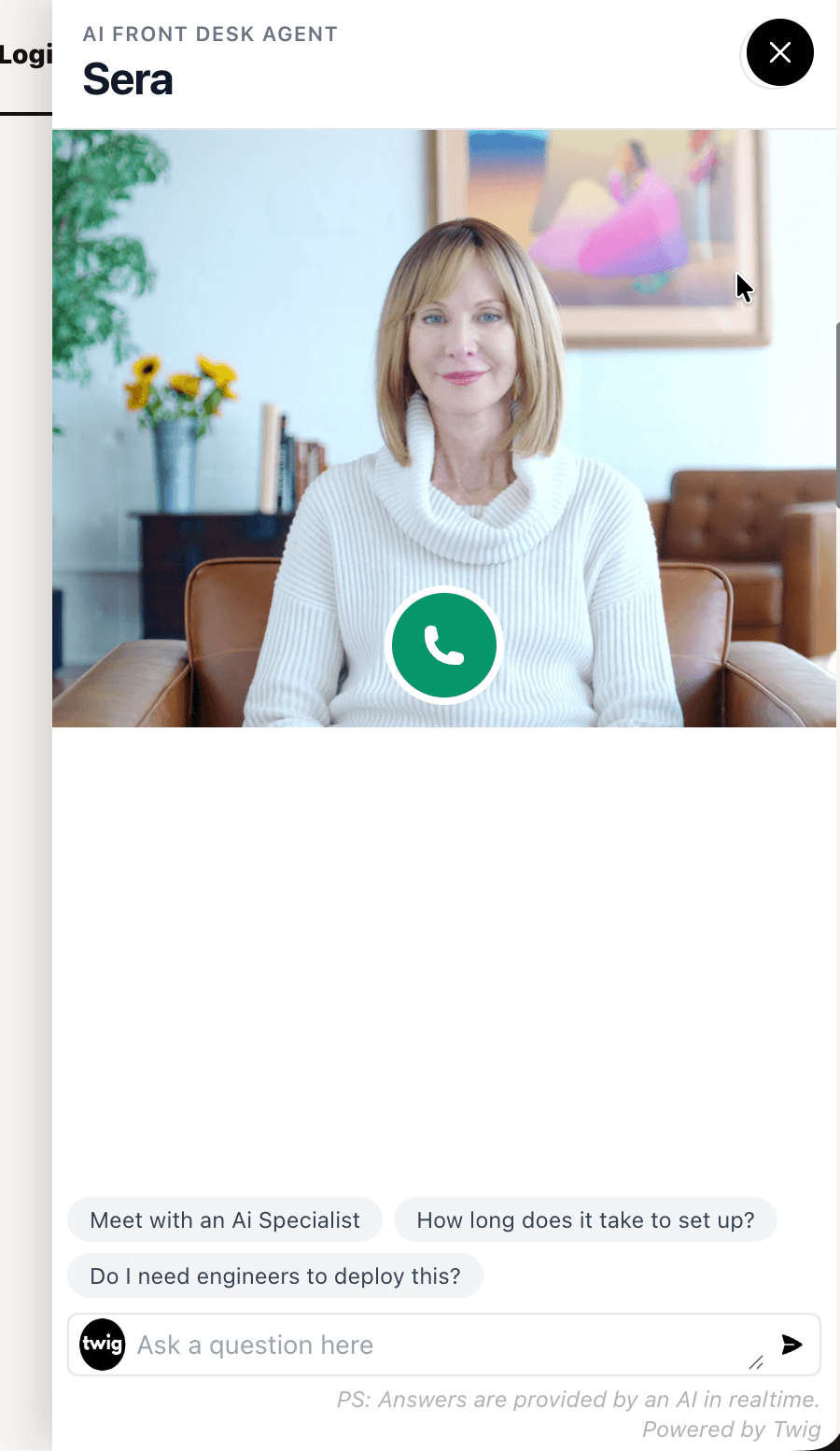
How Sera does it: Sera answers your inbound phone line, replies to demo-request emails, and runs your site chat — one agent, three channels, one CRM logging path.
Integrate with your CRM — without lock-in
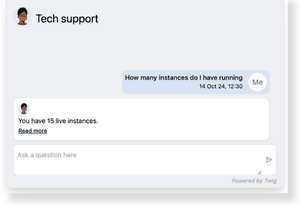
Why it matters: Inbound qualification only matters if the data lands in the right place. Without a clean CRM write-back, AI SDR becomes a chat tool, not a pipeline tool.
Failure mode: Vendor-CRM lock-in (Qualified post-Salesforce). Per-seat licenses that punish growth. Custom connectors that break when fields change.
How Sera does it: Native OAuth for HubSpot, Pipedrive, Microsoft Dynamics, Attio, Close, Folk. REST API and webhooks for everything else. No CRM preference baked in.
Hand off to a human with full context
Why it matters: When AI can't resolve, it has to escalate cleanly — intent, retrieved context, attempted response, confidence score. Otherwise the customer re-explains from scratch and CSAT tanks.
Failure mode: Klarna's 2025 walk-back was driven in part by weak escalation handoffs. Customers had to repeat themselves; the human agent picked up cold. The same trap catches every team that optimizes for automation rate instead of escalation quality.
How Sera does it: Every Sera escalation includes classified intent + the full conversation + retrieved knowledge-base context + confidence score, dropped into your Slack channel, HubSpot inbox, or shared inbox of choice. Humans pick up mid-conversation, not from zero.
Show its work — every conversation, auditable
Why it matters: Sales-side audits, security reviews, compliance teams — they all need to know exactly what the AI said and why. Black-box AI SDR fails procurement on enterprise deals.
Failure mode: Platforms that log a transcript but not the AI's reasoning, retrieved knowledge, or confidence per turn. Looks fine until a customer disputes what was promised.
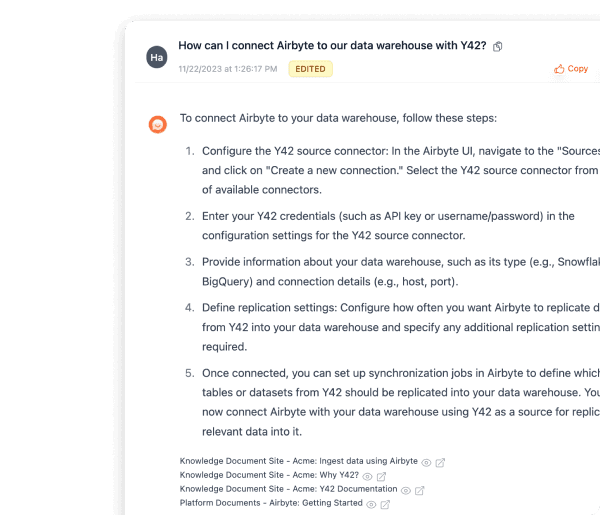
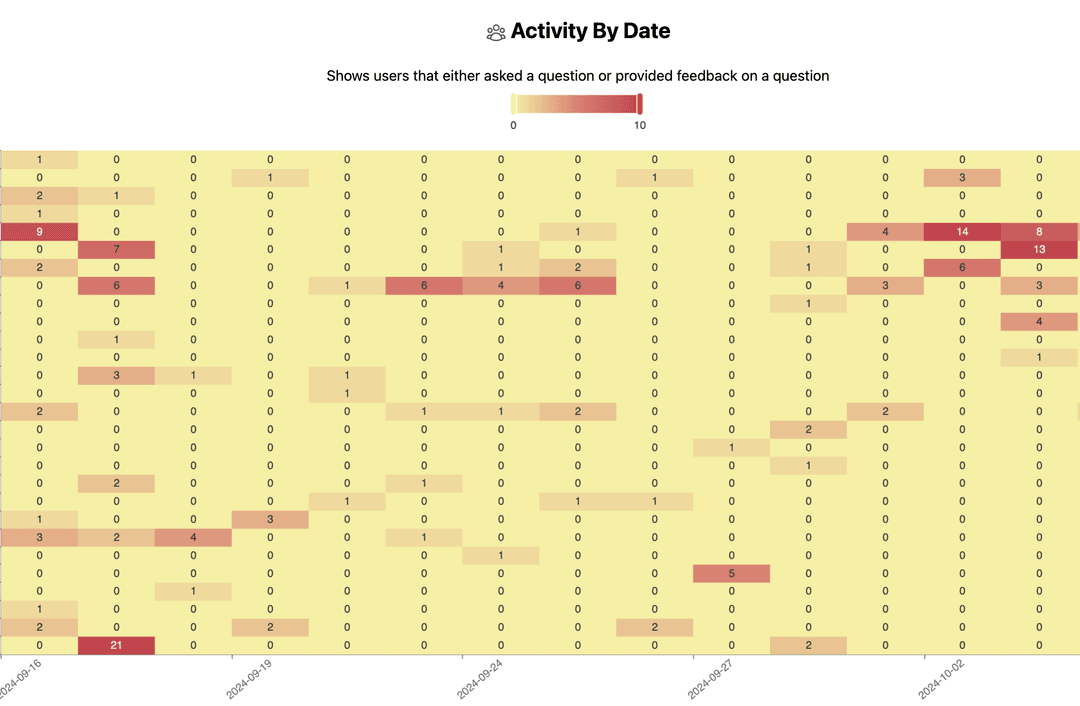
How Sera does it: Every Sera conversation logs the classified intent, retrieved sources, model output, confidence score, and any human override. SOC 2 Type II, PII screening, role-based access, SSO/SAML, US/EU data residency.
Where to go next
The rest of the cluster is organized by what you're actually trying to do.
Already on Qualified.ai?
Post-Salesforce acquisition, Qualified's roadmap is SFDC-only. The migration cluster has CRM-specific playbooks.
Evaluating the category
If you're shopping for your first AI SDR, start with the pricing and the buyer's guide. Then run the ROI for your CFO.
Already on Drift or migrating off
Drift folded into Salesloft post-2022 — same structural problem as Qualified.
B2B SaaS specifically
Pricing-page intent, after-hours coverage, the 5-minute cliff — applied to the SaaS use case.
People also ask
What's the difference between an AI SDR and a chatbot?+
Chatbot is a 2018 word — rules-based decision trees, scripted flows, no real comprehension. AI SDR is the post-LLM version: handles multi-turn conversations, understands intent, qualifies fit, books on the calendar, logs to CRM, escalates with full context. The difference is the same as Google Search vs ChatGPT.
What's the difference between an AI SDR and an AI receptionist?+
Mostly framing. "AI receptionist" emphasizes the voice / front-desk role (dental, real estate, home services). "AI SDR" emphasizes the demo-qualification role (B2B SaaS). Same underlying agent, different go-to-market language. Sera covers both shapes.
Does an AI SDR replace human SDRs?+
No — and the teams pitching it that way are setting themselves up for the Klarna walk-back. AI SDR handles tier-1 inbound (qualifying, scheduling, FAQs); human SDRs move up the value chain to complex deals, expansion, and outbound. "Capacity freed up for higher-value work" is the truer and safer framing.
Do I need to be on Salesforce or HubSpot to use an AI SDR?+
Depends on the vendor. Qualified post-acquisition is SFDC-only for new contracts. Sera is CRM-agnostic — native integrations for HubSpot, Pipedrive, Microsoft Dynamics, Attio, Close, Folk, plus REST API and webhooks for anything else.
What does an AI SDR cost?+
Two pricing models. Per-seat (Qualified, Drift, Ada) — ~$30K–$120K+/year. Per-resolution (Sera, Intercom Fin) — Sera at $5/resolved ticket lands most teams at $12K–$40K/year. The per-resolution model aligns cost with value; per-seat punishes growth. See the pricing page for the full breakdown.
How long does it take to deploy an AI SDR?+
Vendor-dependent. Decagon: 4–8 weeks. Qualified: 6–12 weeks. Drift: 6–10 weeks. Sera: 2–4 weeks for a typical B2B SaaS team — the bottleneck is content audit, not technical setup.
See Sera do all six jobs
30-min call. Live demo on your real content — Sera qualifying chat, answering a voice call, replying to a demo email, logging to your CRM, escalating with full context. All six jobs, one agent.